The post The 13 Exotic Tangkuban Perahu Craters in West Java appeared first on Authentic Indonesia.
]]>
Mount Tangkuban Parahu is one of the active volcanoes in Indonesia that has tremendous appeal for tourists. Located in West Bandung Regency, West Java, the mountain is famous for its peak shape that resembles an inverted boat. The name “Tangkuban Parahu” itself comes from the legend of Sangkuriang, a folk tale that is closely related to this mountain.
The Charm of Craters on Mount Tangkuban Parahu
One of the main attractions of Mount Tangkuban Parahu is its unique and exotic craters. The mountain has about 13 active craters, but only a few can be visited safely by tourists. Here are some of the craters that are worth exploring:
1. Kawah Ratu
Kawah Ratu is the largest crater on Mount Tangkuban Parahu. It resembles a giant bowl with a surface dominated by sulfur. The depth of this crater reaches about 500 meters, and sulfurous steam is constantly billowing from its bottom. The path around Kawah Ratu is safe enough to walk on, but visitors are advised not to stay too long in this area to avoid the side effects of sulfur gas.
The scenery around Kawah Ratu is stunning, especially in the morning when a light mist still covers the area. This place is also a favorite location for photographers who want to capture the dramatic beauty of nature.
2. Domas Crater
Domas Crater is located about 1.2 km from Kawah Ratu and is one of the favorite tourist destinations. The uniqueness of this crater is that there are several pools filled with hot water and sulfur mud. Visitors can soak their feet in sulfur water which is believed to have benefits for skin health.
To get to Domas Crater, tourists must use the services of a guide because the path taken through a fairly dense forest area. During the trip, visitors can enjoy the beauty of the flora and fauna typical of the area, such as rasamala trees, edelweiss, and several animals such as langurs and surili monkeys which are endemic to West Java.
3. Upas Crater
Kawah Upas is another crater that is also found on Mount Tangkuban Parahu. However, unlike Kawah Ratu and Kawah Domas, this crater should not be visited up close due to the high content of toxic sulfur. However, tourists can still enjoy the beauty of Upas Crater from a distance, especially at sunrise when the sunlight reflects beautiful colors around the crater.
Activities to Do in Tangkuban Perahu Mount Area
Besides enjoying the beauty of the crater, there are various other activities that can be done at Mount Tangkuban Parahu, including:
- Taking pictures around the crater: The beauty of the crater and the surrounding landscape makes it an ideal place for photography.
- Bathing in sulphurous hot water: In the vicinity of Domas Crater, tourists can try taking a sulfur hot spring bath, which is believed to be beneficial for health.
- Hiking trails: For those who love adventure, a light trek to Domas Crater can be a fun experience.
- Enjoying Lembang’s culinary specialties: After exploring the crater, tourists can enjoy regional specialties such as roasted corn and bandrek, which are suitable to be enjoyed in the cold air.
Route to Mount Tangkuban Parahu
Mount Tangkuban Parahu is located in Cikahuripan, Lembang District, West Bandung Regency. To reach this location, tourists can choose several routes:
By Private Vehicle
If using a private vehicle, tourists can start the journey from the city of Bandung through Pasteur Toll Road, then continue the journey through Jalan Dr. Djunjung towards Sukajadi, Pasir Kaliki, until finally reaching Lembang and Mount Tangkuban Parahu.
By Public Transportation
If using public transportation, tourists can take public transportation or buses from Bandung City Station to Lembang. From Lembang, the trip can be continued using local transportation such as motorcycle taxis or rental vehicles to Mount Tangkuban Parahu.
Tips for Visiting Mount Tangkuban Parahu
To ensure a comfortable and safe visit, here are some tips that need to be considered:
- Wear warm clothes: The temperature in this area is quite cold, especially in the morning and evening.
- Wear a mask: Due to the high sulfur content in the air, you should wear a mask to protect your breathing.
- Bring drinking water and snacks: Although there are several stalls around the crater, bringing your own lunch is a more practical option.
- Avoid lingering in the crater area: Especially around Kawah Ratu and Kawah Upas, because of the sulfur gas that can be dangerous if inhaled for a long time.
- Use a guide: If you want to explore Domas Crater or other more remote trails, it’s best to use a local guide to ensure safety.
Mount Tangkuban Parahu is a tourist destination that offers natural beauty and a unique experience for visitors. With its exotic craters, cool air, and legendary stories, this place is the right choice to spend vacation time. Make sure to plan your trip well so that the experience of exploring this mountain becomes more enjoyable and memorable.
The post The 13 Exotic Tangkuban Perahu Craters in West Java appeared first on Authentic Indonesia.
]]>The post 9 Great Java Museums to Visit appeared first on Authentic Indonesia.
]]>
1. National Museum of Indonesia
The National Museum of Indonesia is a museum that focuses on archaeology, history, ethnology and geography. Located on Jalan Medan Merdeka Barat, Central Jakarta, the museum stands majestically to the west of Merdeka Square. Better known as Gedung Gajah, the name comes from the elephant statue placed at the front of the museum. The National Museum’s collections come from various parts of Indonesia and have high historical value. For more than two centuries, the museum has contributed to the preservation of Indonesia’s cultural heritage.
As one of the largest and most comprehensive museums in Indonesia and Southeast Asia, the National Museum holds around 141,000 collections from various fields, including prehistoric artifacts, archaeology, numismatics, ceramics, ethnography, history and geography. In addition, the museum also has a collection of classical sculptures from the Hindu-Buddhist era in Java and Sumatra, as well as valuable ceramic collections from across Asia. With its diverse collections, the National Museum is a must-visit destination for anyone who wants to explore Indonesian history and culture.
2. Ullen Sentalu Museum
Ullen Sentalu Museum is a private museum dedicated to introducing the culture of the Mataram nobles. Located on Boyong Street, Kaliurang, Pakem Sub-district, Sleman Regency, Yogyakarta, the museum presents a variety of collections that depict the life of nobles during the Islamic Mataram Kingdom. In addition, Ullen Sentalu Museum also displays the history and culture of the four major kingdoms in Java, namely Surakarta Sunanate, Yogyakarta Sultanate, Mangkunegaran Praja, and Pakualaman Duchy.
3. Angkut Museum
Museum Angkut is a museum that displays a variety of transportation collections from various countries, so it is often referred to as a transportation museum. The museum is managed by Jatim Park Group and was officially opened in 2014. With an area of 3.8 hectares, Angkut Museum offers various rides divided into several thematic zones. The museum has around 300 collections of vehicles from various parts of the world, making it an attractive destination for automotive and transportation history lovers. The unique concept makes Angkut Museum the first transportation museum in Asia, which is not only educational but also entertaining. Museum Angkut is located at Jl. Terusan Sultan Agung No.2, Ngaglik, Kec. Batu, Batu City, East Java.
4. Bank Indonesia Museum
Museum Bank Indonesia is a museum that holds various interesting stories about the world of banking in Indonesia. In addition to being an educational center, the museum also offers an interactive experience for visitors with a variety of interesting and effective information media. Museum Bank Indonesia was officially opened on December 15, 2006 and is located in West Jakarta. The history of this museum begins with the Bank Indonesia City building, which previously had different functions. The building was once used as a church before being restored in 1628. Then, in 1828, the Dutch colonial government rebuilt the building and made it the office of De Javasche Bank. After Indonesia’s independence, the building was converted into the Bank Indonesia City office in 1953. The Bank Indonesia Museum building consists of two floors and was designed by architect Ed. Cuypers. The architectural style carries the Neo-Classical concept with vine ornaments typical of local designs, resembling decorations often found on temple buildings. Before finally functioning as a museum, the building was designated as a cultural heritage in 1993, marking the importance of the historical value contained within.
5. Geology Museum
Bandung Geological Museum is one of the oldest museums in Indonesia, located on Jl. Diponegoro, Bandung Wetan. The museum is a popular destination for visitors who want to see ancient fossils and various collections related to geology – the study of the earth. The existence of this museum is closely related to the history of geological research in Indonesia, which began in the 1850s. At that time, the institution that housed it was known as Dienst van het Mijnwezen. The Bandung Geological Museum was officially established on May 16, 1929, with a building that functions as an office, geological laboratory, and museum to store and exhibit geological survey results from various regions in Indonesia.
6. NuArt Sculpture Park Museum
Next best museum to visit is the NuArt Sculpture Park Museum. It is an art gallery owned by I Nyoman Nuarta, a renowned artist who designed the final design of the State Palace building in IKN Nusantara. In addition, Nyoman Nuarta is also known as the creator of several iconic monuments in Indonesia, such as the Garuda Wisnu Kencana Statue in Bali, the Jalesveva Jayamahe Monument in Surabaya, and the Indonesian Proclamation Monument in Jakarta. As an art space that represents Nyoman Nuarta’s vision and career journey, NuArt Sculpture Park presents a collection of sculptures that reflect the development of his work over time. Visitors can enjoy and capture moments with the various sculptures on display in various corners of the park. The calm and beautiful atmosphere makes the experience even more enjoyable. In addition to being a museum and art gallery, NuArt Sculpture Park is also equipped with various supporting facilities, such as an audio visual room, amphitheater, and sculpture garden. Some of these facilities are often used as creative spaces for other artists to work and hold art performances, making this place a dynamic and inspiring art appreciation center.
7. Pandhapa Art Space
Pendhapa Art Space is an alternative art space in Yogyakarta that provides facilities for artists and communities to engage in cultural and artistic activities. It is a complete art tourism destination, where visitors can live, work, watch art performances, enjoy painting and sculpture exhibitions, and discuss directly with Indonesian artists. Pendhapa Art Space, often referred to as PAS, was originally an extension of Studio Satiaji Sculpture & Artwork owned by Dunadi, a renowned sculptor. The studio specializes in the production of three-dimensional artworks. The construction of PAS began gradually in 2006 and was designed directly by Dunadi. Initially, this place was named Pendopo Sapto Aji and functioned as a multipurpose building. In 2011, Pendopo Sapto Aji was opened to the public, then developed into an art space in 2013. In 2015, PAS initiated an independent art program called STARTUP. A year later, in 2016, Pendhapa Art Space was officially registered as an independent business entity engaged in arts and cultural activities. The development of this art space is part of Dunadi’s big vision to create a place dedicated to the art world, both for local and international communities.
8. The Bucketlist Museum
The Bucketlist is an International Standard Museum and Basketball Court located in Bogor, West Java. The museum was inaugurated in December 2020 with the concept of entertainment, education and experience. Having the slogan “All-Star, All In”, The Bucketlist presents three choices of experience, namely education, experience, and entertainment in one place. One of the advantages of this place is a world-class basketball court with Federal Basketball International (FIBA) standardization. When visiting The Bucketlist, visitors can see directly the basketball court area with stands that can accommodate 300 people and there is a coffee shop with 120 benches. There is also The Bucketlist Gallery, an area featuring galleries of national and international players, The Bucketlist Kitchen, a restaurant with a basketball feel, and a shop selling basketball sports equipment. In the museum area, there are around 300 collections ranging from jerseys, shoes, medals, trophies, action figures, and photos of legendary basketball players, from home and abroad.
9. Wayang Museum
Another great Java museums to visit is the Wayang Museum located in Jakarta Capital. The Wayang Museum is a gallery that displays various types and forms of puppets from all over Indonesia, whether made of wood, leather or other materials. In addition to a collection of local puppets, the museum also houses puppets from various countries, such as the People’s Republic of China and Cambodia. Currently, the Wayang Museum has more than 4,000 different wayang collections. Other than puppets, the museum also collects various types of dolls, especially those from Europe. However, there are also dolls from other countries such as Thailand, Suriname, China, Vietnam, India and Colombia. Not only as an exhibition venue, the Wayang Museum also regularly holds puppet shows every second and third week of the month. As a form of recognition of Indonesia’s cultural heritage, on November 7, 2003, the United Nations (UN) designated Indonesian puppets as a world heritage that must be preserved.
The post 9 Great Java Museums to Visit appeared first on Authentic Indonesia.
]]>The post History of Malioboro Street Jogja: Economic Center of the Dutch East Indies appeared first on Authentic Indonesia.
]]>
Malioboro Street is one of the iconic tourist attractions in Yogyakarta that is always crowded with tourists. Located not far from Tugu Jogja Station, this street has become a favorite destination for travelers from various regions. However, behind its popularity, Malioboro Street holds a history and meaning that is interesting to know.
Malioboro Street was built by the Dutch colonial government and originally did not only serve as a transportation route. It has a long history of witnessing Indonesia’s struggle for independence. Its strategic role in the past made Malioboro an important center of economic and social activities.
So, what is the history and meaning behind Malioboro Street? Read the full story to understand more about this historical icon of Yogyakarta.
History of Malioboro Street
In Yogyakarta, there are three main roads that stretch from Tugu Jogja to Jogja Post Office. They are Jalan Pangeran Mangkubumi, Jalan Jenderal A. Yani, and Jalan Malioboro. Among the three, Malioboro Street has an important role as it is part of the imaginary line of the Yogyakarta Palace.
In the 19th century, the Dutch East Indies government built Malioboro as a center of economic activity. The name Malioboro became popular during the colonial period, precisely between 1790 and 1945. In 1790, the Dutch built Fort Vredeburg at the southern end of the street. In addition, they also built various important facilities such as the Dutch Club or Societeit Der Vereneging Djokdjakarta (1822), the Dutch Governor’s Residence (1830), Javasche Bank and the Post Office.
Malioboro’s rapid development cannot be separated from trade activities, especially between the Dutch government and Chinese traders. In 1887, after Tugu Station was established, Malioboro Street was divided into two parts. Apart from being an economic center, this street also holds the history of Indonesia’s independence struggle.
One of the historical events that took place in Malioboro was the March 1, 1949 General Strike. In a six-hour battle, Indonesian fighters managed to reclaim Yogyakarta from the hands of Dutch colonial forces. This event became one of the important moments in the struggle to defend Indonesia’s independence.
Until now, Malioboro Street remains the center of Yogyakarta’s life by maintaining its original concept and design. Various strategic places can still be found in this area, such as the DIY Governor’s Office, DIY DPRD Building, Beringharjo Market, Malioboro Terrace, and the Presidential Palace. Malioboro continues to be an inseparable cultural, historical and economic icon of Yogyakarta.
The Meaning of Malioboro
The name of Malioboro Street, which is thought to have been built by the Dutch government in the 1750s, has an interesting historical background. The name was inspired by a royal road mentioned in the Ramayana, which served as the main road and had an important role. This road was used to welcome the king and his guests and was believed to bring various blessings.
The street was originally named Malyabhara, which was later adapted as the name of the main street in the center of Yogyakarta. Later on, the Javanese pronunciation changed the sound to Malioboro, along with the habit of pronouncing the letter a into o. In Sanskrit, Malya means flower, while bhara means wearing. Therefore, Malyabhara can be interpreted as “the street adorned with flowers”, reflecting the specialty of the street.
The post History of Malioboro Street Jogja: Economic Center of the Dutch East Indies appeared first on Authentic Indonesia.
]]>The post 9 Recommended Magelang Tourist Attractions appeared first on Authentic Indonesia.
]]>
Surrounded by hills and mountains, this city offers stunning panoramas, cool air and a calm atmosphere. Moreover, Magelang also has many instagramable tourist spots, perfect for photography lovers. From exotic waterfalls, relaxing tea gardens to historical educational tours, Magelang tourist attractions are ready to provide a memorable vacation experience.
1. Borobudur Temple
Borobudur Temple is a must-visit tourist attraction in Magelang. The temple was built around the 8th and 9th centuries and has 2,672 relief panels and 504 arches that you can see on every wall of the temple.
Don’t forget, when you come here you have to climb the stairs to the top to see the large stupa that is right in the center of the temple and surrounded by 72 other smaller stupas.
This Magelang tourist spot has been officially named a UNESCO cultural heritage. In the temple area you can also visit 3 museums namely Borobudur Museum, Samudraraksa Ship Museum, and MURI Museum.
The Borobudur Temple area is open to the public from 07.00-17.00 WIB. Quoting from the official Borobudur website, you must be prepared to spend around Rp 25,000-Rp 50,000 depending on age.
2. Candirejo Tourism Village
This Magelang tourist spot is arguably the type of tour that offers many experiences in one place. Candirejo Tourist Village is located in Borobudur Sub-district, Magelang and is in the mountainside area.
You will be able to find many views of the hills here. Moreover, in the southern part of the village there is a green expanse with a beautiful natural panorama that is very famous, namely the Menoreh Hills.
You can also enjoy a culinary tour experience by enjoying typical dishes of Candirejo Tourism Village. One of them is mangut beong, which is processed beong fish from the Progo River with savory and delicious yellow spices. There are other typical snacks of this village, such as banana, combro and tempe chips.
For those of you who like adventure, you can try offroad in Candirejo Tourism Village. You will pass through the Menoreh hills, cross the Progo River, and finally arrive at Watu Kendil.
Not only that, you can also enjoy the experience of catching fish in the river in the traditional way. The typical fishing gear of this village is called bronjong. The location of this fishing in the river, of course, is something you will rarely get in the city.
3. Mendut Temple
Another Magelang tour that is still around the temple is Mendut Temple. The temple was built around the 9th century and is 26.4 meters high. Besides being the center of Buddhist practices and rituals, this place is also believed by Javanese Kejawen adherents as a place of meditation.
To enjoy the Mendut Temple area, you can visit from 07.00-19.00 WIB by paying an entrance ticket of around IDR 10,000 per person.
4. Enam Langit by Plataran
This tourist destination in Magelang is relatively new and is currently popular among tourists. Located in the green area of the Menoreh hills, this place offers a stunning panorama with views of six mountains on the island of Java.
Enam Langit by Plataran can be utilized for various activities such as meetings, picnics, lunch, enjoying sunrise or sunset, meditation, yoga, outbound, and photography.
This much-in-demand tourist spot is located in Candirejo Village, Borobudur District, and can be accessed easily by private vehicle. Enam Langit by Plataran is open every day from 07.00 to 17.00 WIB.
Want to experience dining above the clouds with a beautiful view of Magelang in the background? You need to prepare a fee ranging from IDR 175,000 to IDR 1,800,000, depending on the package chosen.
5. Chicken Church
Chicken Church is a religious tourism destination in Magelang which is about 20 minutes away from Borobudur Temple. The name was given by the residents of Gombong Hamlet, Kembanglimus Village, Magelang Regency, because the shape of the building resembles a chicken.
The building was founded by Daniel Alamsjah in 1990. Its popularity increased after appearing in one of the famous Indonesian movies Ada Apa dengan Cinta 2, thus attracting more tourists.
To enjoy the uniqueness of the Chicken Church, visitors are charged an entrance ticket of around Rp 25,000 per person. This tourist spot is open every Wednesday to Monday, from 08:00 to 17:00 WIB.
6. Punthuk Setumbu
For those of you who like nature tourism, don’t miss Magelang tourism in Punthuk Setumbu. To reach this area, you have to trek for 15 minutes until you reach the top.
The location is in the Karangrejo Village area and is often a spot for tourists to enjoy the sunrise in the morning. From the peak, you will be able to enjoy the panoramic view of Borobudur Temple from a distance while enjoying the very cool and fresh morning air.
This tourist spot operates from every day from 04.00-17.00 WIB. However, the best time to visit Punthuk Setumbu is before sunrise. With a price of around IDR 20,000 per person, you can witness the beautiful view of the sunrise in the Magelang region.
7. Svargabumi
This Magelang tourist spot is located in Ngaran and Gopalan hamlets, Borobudur Village, Magelang, Central Java. It is a rice field area located not far from Borobudur Temple.
For some people who have been there, Svargabumi is often compared to the Ubud area in Bali. You will find many beautiful photo spots accompanied by cool and refreshing air.
You can also enjoy a bed swing or floating breakfast in the swimming pool. Open from 08.00-17.00 WIB, Svargabumi charges an entrance ticket price of around Rp 15,000 to Rp 30,000
8. Silancur Highland
This Magelang tourist spot is in Kaliangkrik area. Silancur Highland is located at an altitude of 1,300 meters above sea level and has a very beautiful and amazing natural panorama. From here, you can also enjoy the view of Mount Sumbing and the row of Mount Merapi.
Silancur Highland is located in Dadapan Hamlet, Mangli Village, Kaliangkrik Subdistrict which is about 15 km from the center of Magelang City which can be accessed easily by car.
To feel the cool mountain air, you only need to pay around Rp 10,000 – Rp 20,000 per person. Silancur Highland is open 24 hours, so you don’t have to worry about coming too late.
9. Nepal Van Java
Ever wondered about the panoramic view of Mount Everest in Nepal? If you are curious, you can enjoy it in Magelang tourism. This tourist spot is actually a tourist hamlet in the area of Dusun Butuh. Don’t forget to document your moments on vacation in Nepal Van Java!
Nepal Van Java is located on the slopes of Mount Sumbing, so don’t be surprised if the access to get there will go through many climbs. Make sure your vehicle is strong enough to go uphill.
To be able to take pictures with views of Mount Sumbing and housing that resembles housing around Mount Everest, you only need to pay for an entrance ticket of around IDR 8,000 with a motorcycle parking fee of around IDR 3,000 and IDR 10,000 for car parking.
The post 9 Recommended Magelang Tourist Attractions appeared first on Authentic Indonesia.
]]>The post Discovering the Timeless Charm of Madakaripura Waterfall appeared first on Authentic Indonesia.
]]>
The Legend Behind the Falls
Madakaripura Waterfall is not just a natural spectacle; it is steeped in rich history and local lore. According to legend, the waterfall was a place of meditation for Gajah Mada, a prominent military leader and prime minister of the Majapahit Empire. It is said that he spent his final days here in deep contemplation, dedicating himself to achieving unity across the Indonesian archipelago. The name “Madakaripura” itself translates to “the last place of Gajah Mada,” adding a mystical aura to the site.
A Hidden Gem in Probolinggo
Located about three hours from Surabaya, Madakaripura Waterfall is hidden amidst lush hills and dense forests, making the journey to the falls an adventure in itself. The final stretch requires a short trek through a scenic path that winds alongside a river, offering glimpses of towering cliffs and verdant greenery. The sound of rushing water grows louder with each step, building anticipation for the sight that awaits.
The Spectacular Waterfall
Madakaripura is not just a single waterfall; it is a collection of cascading streams that tumble down a semi-circular cliff, creating a curtain of water that envelops the area in mist. The main waterfall plunges from a height of 200 meters, making it one of the tallest in Indonesia. Surrounding it are smaller waterfalls that add to the ethereal beauty of the site. Sunlight filtering through the mist creates a mesmerizing play of light and shadows, making it a photographer’s paradise.
Visitors are often awestruck by the natural amphitheater formed by the towering cliffs, which seem to embrace the waterfall in a protective circle. The experience is both humbling and uplifting, as the sheer scale and beauty of the falls leave a lasting impression.
Preparing for the Adventure
While the beauty of Madakaripura Waterfall is undeniable, visiting it requires some preparation. Here are a few tips to ensure a smooth and enjoyable trip:
- Wear Appropriate Footwear: The trek to the waterfall involves walking along slippery paths and crossing shallow streams. Comfortable, waterproof shoes are a must.
- Bring a Raincoat or Poncho: Due to the constant mist and spray from the waterfall, staying dry is nearly impossible. A raincoat will help keep you comfortable.
- Hire a Local Guide: To navigate the trail safely and learn more about the site’s history and significance, consider hiring a local guide.
- Visit During the Dry Season: The best time to visit is during the dry season (May to October) when the paths are less muddy and the water flow is manageable.
Connecting with Nature
One of the most remarkable aspects of Madakaripura Waterfall is its ability to connect visitors with nature. The soothing sound of cascading water, the cool mist on your skin, and the lush greenery all around create a sensory experience like no other. It’s a place where time seems to stand still, allowing you to pause and reflect on the beauty of the natural world.
For those seeking adventure, the trek itself offers an opportunity to explore the region’s rich biodiversity. The surrounding forest is home to a variety of flora and fauna, adding an element of discovery to the journey.
Sustainable Tourism
As Madakaripura Waterfall continues to gain popularity, it is essential to practice responsible tourism to preserve its pristine environment. Visitors are encouraged to:
Dispose of Waste Properly: Carry all trash back with you and avoid littering.
Stick to Designated Paths: Stay on marked trails to minimize your impact on the environment.
Support Local Communities: Hire local guides and purchase snacks or souvenirs from nearby vendors to contribute to the local economy.
Beyond the Waterfall
While Madakaripura Waterfall is undoubtedly the highlight of the region, Probolinggo has much more to offer. Nearby attractions such as Mount Bromo and the Tengger Semeru National Park provide additional opportunities for adventure and exploration. Combining a visit to Madakaripura with these destinations makes for an unforgettable trip.
The post Discovering the Timeless Charm of Madakaripura Waterfall appeared first on Authentic Indonesia.
]]>The post Ngadas Village, A Piece of Heaven Above the Clouds of Bromo appeared first on Authentic Indonesia.
]]>
With stunning natural beauty and authentic cultural life, Ngadas Village is home to the Tengger tribe, one of the indigenous communities that has a rich tradition and history that is still preserved today.
Geographical Location and Natural Beauty of Ngadas Village
Ngadas Village is surrounded by mountains and green valleys that offer incredible views. From the village, visitors can see a panoramic view of Mount Bromo, Mount Semeru, and Mount Batok rising majestically in the distance. The air temperature in the village is relatively cool, ranging from 5°C to 20°C, creating a refreshingly cool atmosphere.
The natural beauty of Ngadas Village is not only limited to the mountain scenery. The well-organized farmlands add to the village’s charm. Fields planted with potatoes, carrots, cabbage and leeks characterize the landscape. In addition, the forests surrounding the village provide a very calming natural feel.
Tengger Indigenous Community
Ngadas Village is inhabited by the Tengger tribe, an indigenous community known for its religious life and cultural traditions. The Tengger are believed to be descendants of the Majapahit kingdom who chose to live in the mountains to preserve their culture.
The life of the people of Ngadas Village is closely related to Hindu-Buddhist teachings. Traditional ceremonies such as Yadnya Kasada are one of the most recognizable traditions. In this ceremony, the Tengger people offer crops to the crater of Mount Bromo as a form of gratitude and respect for their ancestors. Besides Yadnya Kasada, there are also other traditions such as Karo, Barikan, and Nyadran that illustrate the rich culture and spirituality of the local community.
Daily Life in Ngadas Village
Most people in Ngadas Village work as farmers. The agricultural land in the village is very fertile thanks to the volcanic soil from the eruption of Mount Bromo and Mount Semeru. Apart from farming, some residents are also involved in the tourism sector, such as being tour guides, homestay providers and horse rentals for tourists who want to explore Mount Bromo.
The existence of homestays in Ngadas Village is a special attraction for tourists. By staying with Tengger tribe families, tourists can experience first-hand the daily life of indigenous people, taste typical food, and learn about their traditions and beliefs. This experience gives a deep and different impression compared to just visiting ordinary tourist attractions.
Tourism Potential of Ngadas Village
As part of the TNBTS area, Ngadas Village has great potential in the tourism sector. Apart from being the entrance to Mount Bromo, the village also offers unique cultural tourism. Travelers can witness traditional ceremonies, enjoy the beauty of nature, and interact with the local community.
One of the main attractions is the authenticity and hospitality of the people of Ngadas Village. They maintain their traditions and culture very well, making this village a clear example of how modernity can go hand in hand with cultural preservation.
Challenges and Cultural Preservation
Despite its many potentials, Ngadas Village also faces various challenges, such as the pressures of modernization and climate change. Modernization can threaten the preservation of indigenous culture if not managed wisely. Therefore, collaborative efforts between the government, local communities and other parties are needed to ensure that the culture and traditions of the Tengger tribe are maintained.
In addition, climate change can affect agricultural yields, which are the main source of livelihood for the community. A sustainability-based approach needs to be implemented to protect the natural environment around the village while supporting the lives of local people.
The post Ngadas Village, A Piece of Heaven Above the Clouds of Bromo appeared first on Authentic Indonesia.
]]>The post Kebo-Keboan Ritual, A Unique Performance from Banyuwangi Farmers appeared first on Authentic Indonesia.
]]>
The Origin of The Kebo-keboan Ritual
The Kebo-keboan tradition has been passed down from generation to generation since the 18th century. This tradition originated from the Osing people who live in Alasmalang Village. Legend has it that the tradition began when the village was hit by an outbreak of disease believed to be sourced from supernatural forces. The plague not only affected the villagers, but also the crops, with the presence of pests threatening their harvest.
A long time ago, farmers experienced simultaneous crop failures. As a result, rice supplies became very scarce, and many residents fell ill and died. In this critical situation, a village elder named Mbah Karti decided to perform a meditation to seek guidance. After receiving the guidance, Mbah Karti directed the villagers to hold a massive thanksgiving. In the ritual, the farmers were asked to act as buffaloes as a form of respect to Dewi Sri, the goddess who symbolizes prosperity and safety. A miracle occurred: after the thanksgiving, disease outbreaks and pest attacks on crops suddenly disappeared.
In Aliyan Village, the figures who received similar guidance were Mbah Wongso Kenongo and his son, Joko Pekik. After meditating, Joko Pekik exhibited an unusual behavior, imitating the behavior of a buffalo while rolling in the rice fields. Although this seemed strange, it was followed by the disappearance of pests and plagues. Soon, the harvest was bountiful, bringing prosperity back to the villagers.
Why Buffalo and Not Cattle?
Buffaloes were chosen because of their great service in helping farmers every day. Their power is greater than cows, which is why buffaloes are mostly chosen to help plow the fields. Farmers would not be able to work without the help of buffaloes, so the Kebo-keboan ritual is also an expression of gratitude.
Kebo-keboan in Various Villages
Currently, there are only two villages in Banyuwangi that still carry out the kebo-keboan tradition, namely Alasmalang Village and Aliyan Village. The purpose is still the same, to express gratitude and ward off pests.
Implementation of Kebo-keboan Ritual
In accordance with the stages in each village, usually the local residents will hold a cleaning event before the kebo-keboan begins. Then one day before, the women gather to prepare offerings consisting of tumpeng, kinang ayu, ingkung ayam, water jugs, to be placed at each corner of the road intersection.
Ceremonial equipment, namely pacul, rice, rice seeds, crops, and sugar cane are also prepared by the youth. Farmers also prepare dams to irrigate the rice that will be planted during the kebo-keboan ceremony.
The next day, in the morning, a prayer is held together before the event begins. Keboan (kebo-keboan actors) appear with oil-covered black bodies, horns, wigs, and some carry plows. They are accompanied by a beautiful woman who plays the role of Dewi Sri and paraded around the village, but because most of the keboan are in a trance, or trance on the way, the keboan will move here and there and even attack people.
Upon encountering a mud pit, the keboan usually immediately rolls around in the mud, splashing mud in all directions. This activity lasts for quite a while without showing any signs of fatigue. However, if a keboan is so exhausted that it falls down, the family will immediately revive it by splashing it with water before taking it home.
While the keboan is running around, Dewi Sri distributes rice seeds to the farmers to be planted immediately. The farmers scramble to get the seeds, because it is believed that the seeds obtained from this ceremony bring blessings, so that they will grow fertile and provide abundant harvests.
After the ceremony is over, all participants return to their respective homes while carrying the rice seeds that have been distributed. In the evening, a shadow puppet show is held that tells the story of Dewi Sri, as a form of entertainment for residents who have participated in the implementation of the kebo-keboan ceremony.
The Importance of Kebo-keboan Implementation
Kebo-keboan has an important role in maintaining Banyuwangi’s cultural heritage. This tradition symbolizes strength, respect for ancestral spirits, belief in the spiritual world, and gratitude to the Almighty.
Kebo-keboan also attracts tourists who are interested in getting to know and experience the unique culture of Banyuwangi. Through kebo-keboan, Banyuwangi people not only strengthen their cultural identity, but also preserve the noble values passed down from generation to generation.
The post Kebo-Keboan Ritual, A Unique Performance from Banyuwangi Farmers appeared first on Authentic Indonesia.
]]>The post Explore Central Java Through These 5 Ecotourism Destinations appeared first on Authentic Indonesia.
]]>
Here are 5 ecotourism destinations in Central Java worth exploring for an unforgettable, eco-friendly and meaningful travel experience.
1. Umbul Sidomukti
Located at an altitude of 1,200 meters above sea level (masl), the atmosphere at Umbul Sidomukti is very cool and refreshing. In this tourist spot, visitors can swim while enjoying the view of Semarang City from a height. Its location at the foot of Mount Ungaran adds to the coolness and beauty of this place. After swimming, visitors can relax while enjoying a cup of coffee at Villa Pondok Kopi located in the same area. If interested in camping, tourists can continue their journey to Mount Ungaran Rose Post or do some light trekking to Promasan Tea Garden.
2. Grand Maerokoco
Another ecotourism destinations in Central Java is the Grand Maerokoco in Semarang. The city of Semarang has a complete topography, including mountains, hills, and coastal areas. One of the city’s interesting natural tourist destinations is the Grand Maerokoco mangrove forest. In this place, visitors can explore the mangrove forest with a bamboo path as high as one meter from the water surface. The path is made in various ways, some surrounding the forest and some going deeper into the shady and beautiful area of the mangrove forest. Grand Maerokoco has reopened with a maximum visit limit of 3,000 people per day.
3. Tembi Tourism Village
For travelers who want to experience the rural atmosphere and avoid the crowded city, Tembi Tourism Village can be an option. Here, visitors can enjoy fresh air, green views of rice fields, and experience the wisdom of local culture. Activities around the village can be done by riding an andong, becak, mini train, or onthel bicycle. Special tour packages to learn farming are also available. Tembi Tourism Village also has the Tembi Cultural House Museum which exhibits various Javanese heirlooms, such as keris and gamelan.
4. Pindul Cave
River tubing may be a common experience, but exploring a river in a cave can be a unique and unforgettable experience. At Pindul Cave, visitors can experience the thrill of cave tubing. The cave is located in Bejiharjo Village, Karangmojo District, Gunungkidul Regency, Yogyakarta. With a length of 350 meters, this cave tubing activity takes about 45 minutes. Along the way, visitors will be treated to charming views of stalactites and stalagmites. During the tour, the guide will explain about the history of the cave and the fauna such as bats that inhabit this cave. For those looking for a challenge, there is a spot to jump off the cliff inside the cave.
5. Nglambor Beach
The next ecotourism destinations in Central Java is Nglambor Beach. One of the top beach destinations in Yogyakarta is Nglambor Beach. Here, visitors can do snorkeling to enjoy the beauty of the turquoise sea, see coral reefs, and interact with small fish that swim freely. The area of Nglambor Beach is quite small and not so wide. This made Nglambor Beach initially empty of visitors. However, some tourists realized the potential of Nglambor Beach that can be used for snorkeling. As a result, Nglambor Beach is now one of the tourist destinations for visitors who want to experience snorkeling in Yogyakarta. The underwater beauty is worth exploring.
The post Explore Central Java Through These 5 Ecotourism Destinations appeared first on Authentic Indonesia.
]]>The post International Mask Festival (IMF) 2024: Celebrating the Beauty of Solidarity appeared first on Authentic Indonesia.
]]>Date: November 15-16, 2024
Time: 15.00 – 22.00 WIB
Venue: Pendhapi Gede, Surakarta City Hall
About International Mask Festival (IMF)
Since its inception in 2014, the International Mask Festival (IMF) has grown into a vibrant annual event in Solo, Central Java. The festival elevates the mask as a symbol of cultural richness that is not only visually stunning, but also rich in historical and philosophical value. Every year, IMF offers a variety of interesting activities, ranging from mask dance performances, mask exhibitions, international conferences, to culinary bazaars and local crafts. This event is not only a source of pride for the people of Solo, but also attracts visitors from various regions in Indonesia and abroad.
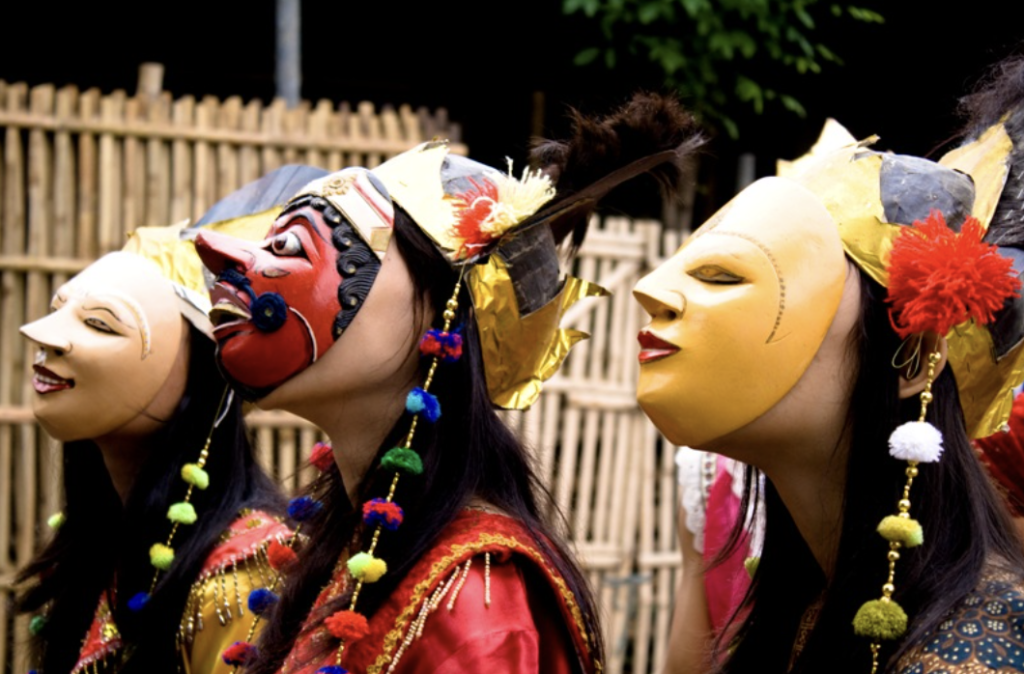
Credit: panorama-magz.com
Series of Interesting Events at International Mask Festival 2024
During the two-day event, IMF 2024 visitors will be spoiled with various interesting events that are full of meaning and education, including:
Mask Dance Show
Witness the beauty and diversity of mask dance performed by local and international artists. Mask dance is not only an art performance, but also a life story that reveals history, philosophy, and an expression of solidarity between nations.
International Conference
In this conference, various experts and artists from around the world will share their knowledge and experience. With the theme “Mask as a Means of Cultural Diplomacy,” the conference opens up opportunities for discussion on the role of mask art as a means of cultural communication that transcends national borders.
Culinary and Craft Bazaar
Don’t miss the opportunity to savor Solo’s diverse culinary specialties and unique handicrafts at the IMF 2024 bazaar. In addition to offering an appetizing culinary experience, this bazaar also invites visitors to get to know and appreciate local works that are full of uniqueness and artistic value.
Mask Exhibition
IMF 2024 will feature a mesmerizing collection of masks from various regions. Each mask has a different story and characteristics, reflecting the beauty and cultural uniqueness of its respective region of origin.
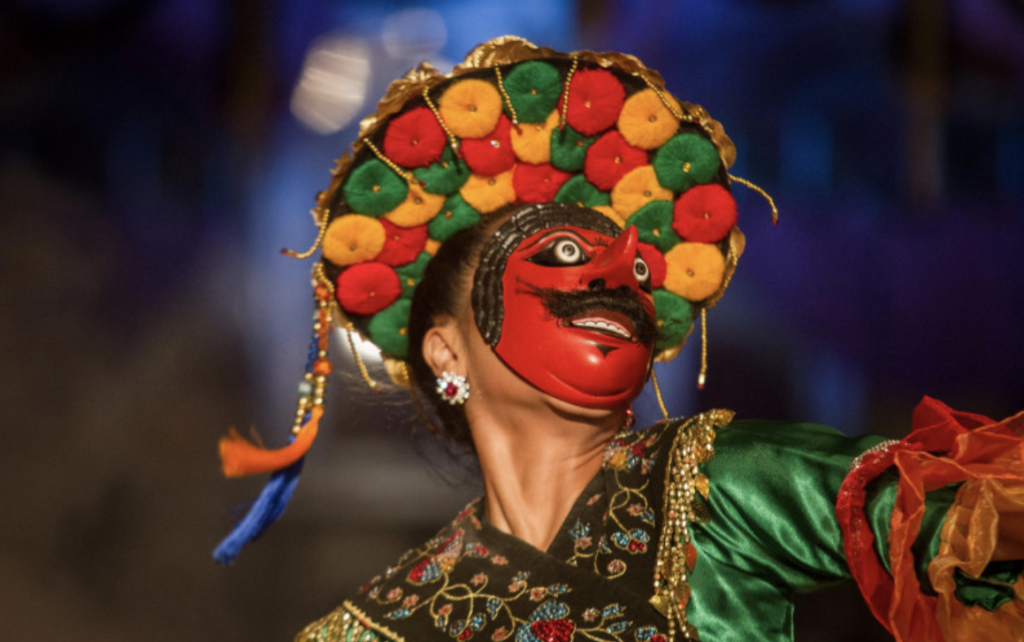
Credit: antaranews.com
International Mask Festival 2024 Goals
IMF 2024 aims to introduce Indonesian masks as part of a culture rich in educational and aesthetic values and to support the development of cultural tourism destinations, both at the domestic and international levels. Here are some of the main objectives of IMF 2024:
Cultural Diplomacy
The IMF is an important platform for establishing relationships between countries and regions through cultural diplomacy, as well as introducing Indonesia in the international arena as a country with a rich cultural heritage.
Cultural Tourism Destination
Through the organization of the IMF, Solo is increasingly recognized as a city that offers a distinctive cultural tourism experience, attracting both domestic and foreign tourists to come and enjoy the charm of local culture.
Tourist Attraction
The IMF is expected to attract more tourists to visit Solo City, both domestic and international tourists, which in turn will have a positive impact on the tourism sector and the local economy.
Education and Appreciation of Mask Art
The festival also acts as a means of education for the community, providing insight into the art of masks and the meaning contained behind each carving and color of the mask, which has a long and rich history throughout the archipelago.
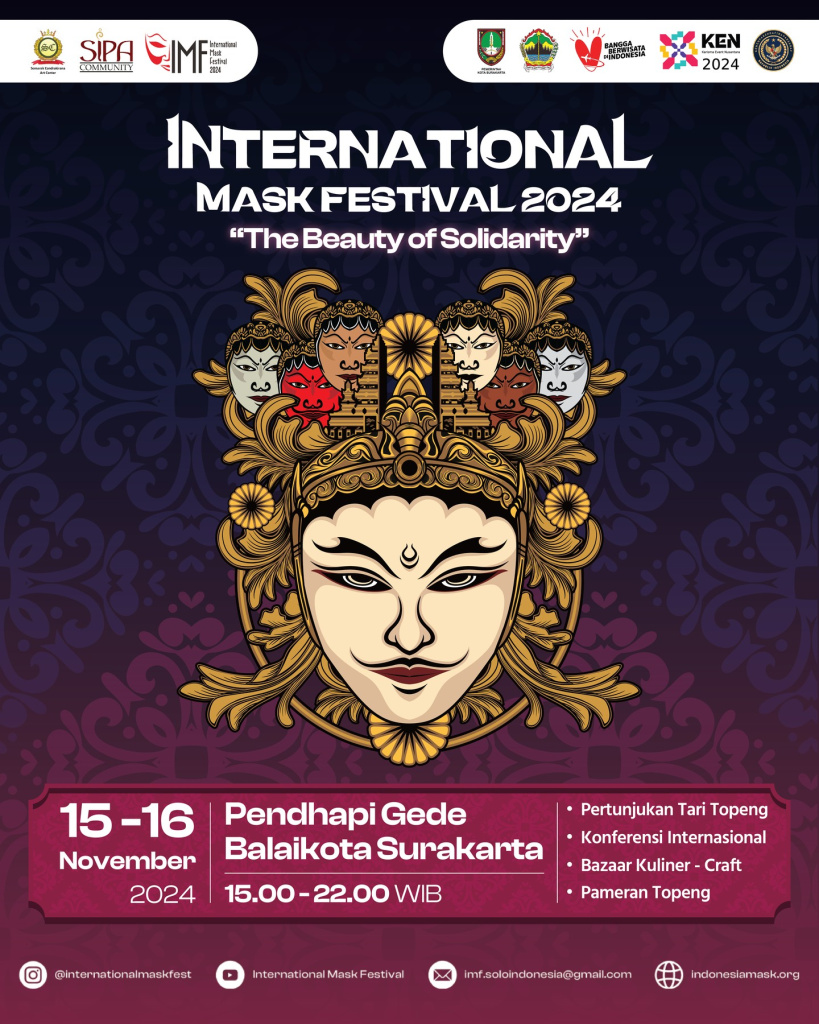
Credit: seremonia.id
Let’s Come and See The IMF 2024!
With the meaningful theme of “The Beauty of Solidarity,” IMF 2024 invites art and culture lovers to celebrate the richness of culture as a unifying force. Don’t miss the chance to be part of Solo’s biggest cultural festival! Prepare yourself to enjoy the beauty and diversity of mask art that will bring you to know Indonesia through a unique and profound perspective.
The post International Mask Festival (IMF) 2024: Celebrating the Beauty of Solidarity appeared first on Authentic Indonesia.
]]>The post 5 Old Town Attractions in Central Java appeared first on Authentic Indonesia.
]]>
The old town is a historical heritage area consisting of ancient buildings with an old-fashioned feel. The existence of old towns scattered in various regions in Indonesia is a reminder of the colonial occupation in the past. These buildings usually have a distinctive architectural style, such as European or Chinese style.
Here are old town attractions in Central Java
Because of its uniqueness, the old town has now developed into a crowded tourist destination. When talking about old towns in Central Java, most people might immediately think of the old town in Semarang. However, apart from Semarang, there are still several other old towns in Central Java that become the silent witnesses of Indonesian history.
1. Semarang Old Town
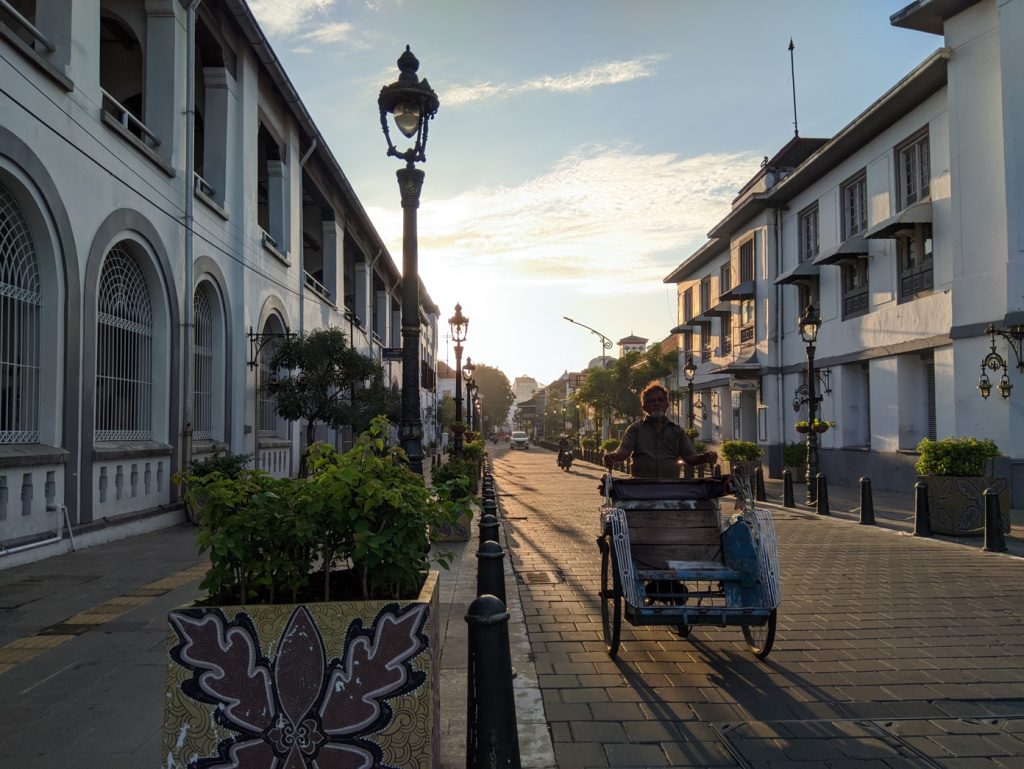
Credit: wikipedia.org
As a trade and military center during the Dutch occupation around the 18th century, Semarang retains this historical legacy as an old town attractions in Central Java. This area is known as Kota Lama or Little Amsterdam, due to the many historical buildings that are similar in layout to those in Amsterdam, the capital of the Netherlands. These buildings can be found in the Old Town area, which is located on Jalan Letjen Suprapto, North Semarang District.
When visiting the Old Town area, you will be greeted by the sight of buildings with classic European architectural styles that bring a nostalgic atmosphere from the Dutch colonial period. Some of the famous buildings and often used as photo spots by visitors in this area include Gedung Marba, Taman Srigunting and Blenduk Church. Moreover, there are still many other classic buildings that are interestingly still functioning today.
2. Solo Old Town
Credit: detik.com
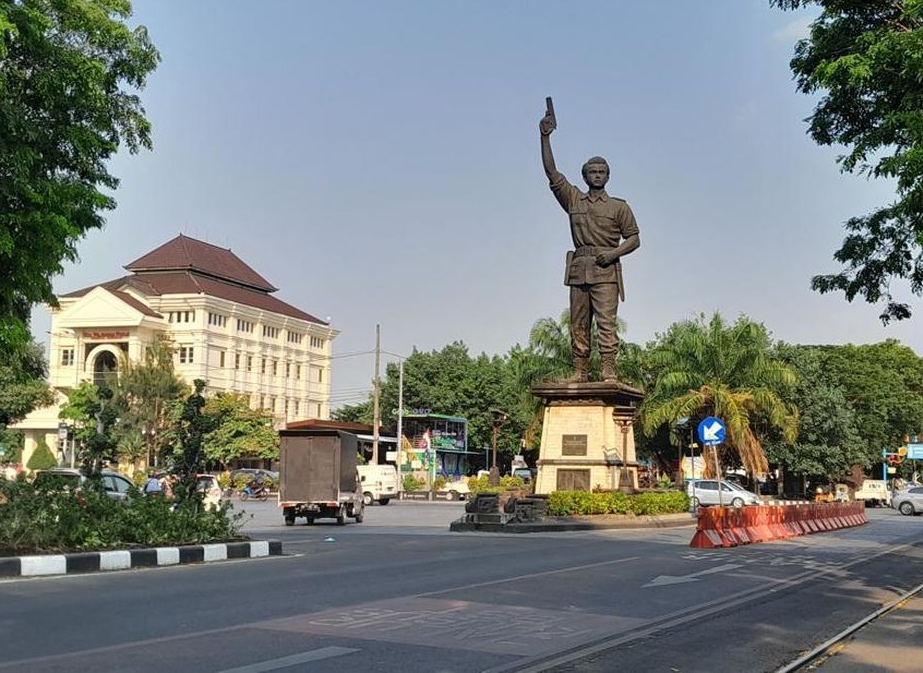
Solo has a rich history, from the ancient Javanese kingdom to the Dutch colonial era. Tangible evidence of the Dutch occupation of Solo are the Loji Gandrung and Omah Lowo buildings, which still stand majestically today. Both buildings display the splendor of old Dutch architecture and attract tourists to explore the traces of history in Central Java.
Along Jalan Jenderal Sudirman, there are ancient Classical-style buildings, such as the Bank Indonesia office, Vastenburg Fort and Pasar Gede. While on Slamet Riyadi Street, you can find railroad tracks that have been operating since the 1900s, as well as European-style buildings such as the Danar Hadi Batik Museum.
3. Salatiga Old Town
Credit: wikimedia.org
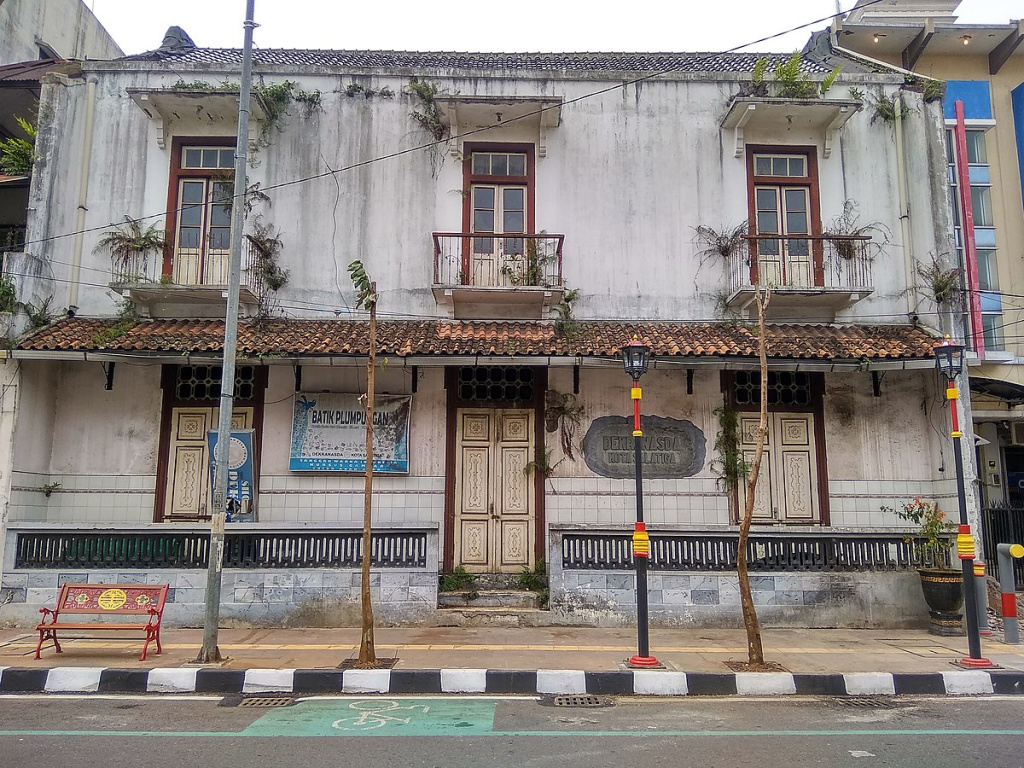
Salatiga is strategically located near Mount Merbabu, giving the city a cool temperature. This factor made Salatiga a favorite place for the Dutch during the colonial era. Traces of their legacy can still be found in the form of old classical European-style buildings along Jalan Diponegoro, Jalan Sudirman and Jalan Hasanuddin.
Some interesting old buildings that can be used as destinations include the GPIB Tamansari Church and the Pansion Van Blommestein Hotel. These two buildings from the Dutch colonial era still stand firmly today. Other classic-style buildings that can be found in Salatiga include Pendapa Pakuwon, Salatiga Mayor’s Office House and Papak Building.
4. Banyumas Old Town
Credit: rri.co.id
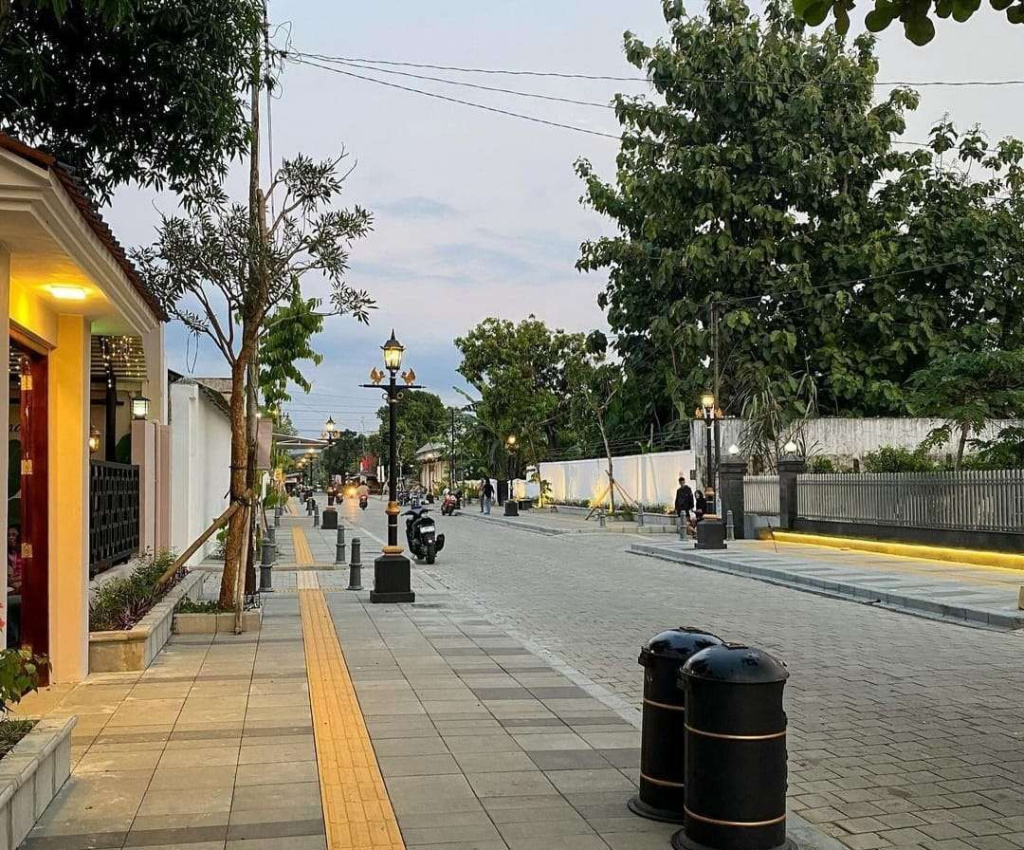
By the end of 2023, the revitalization of Kota Lama Banyumas has been completed and the area is back in operation as a historical, cultural and art tourism destination. Before becoming a tourist attraction, Kota Lama Banyumas used to be the center of Banyumas Regency government before it was moved to Purwokerto City. The buildings in this old town area show a blend of various cultures, such as Chinese, European and Javanese. The area also houses a number of cultural heritage attractions, including the city hall building, wayang museum, old well, Nur Sulaiman Great Mosque and Boen Tek Bio temple.
Here, visitors can experience the atmosphere of a 1930s-era Chinatown. The neat layout of the city and the use of paving blocks add to the classic and retro impression in this area. Those are some of the old town tourist destinations in Central Java that you can visit on vacation while remembering the history of Indonesia. The existence of this old town in Central Java is clear evidence of the traces of colonial occupation in the past. Buildings with ancient classic architectural styles in these old cities are suitable for those of you who are looking for vintage Instagramable photo spots. Get ready, your smartphone gallery will be filled with aesthetic photos!
5. Rembang Old Town
Credit: idntimes.com
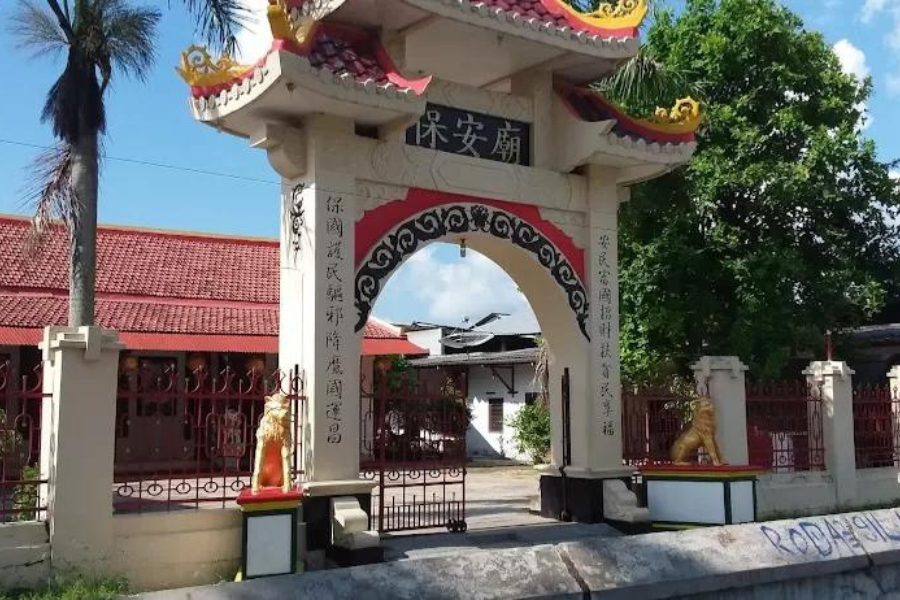
Lasem is an old town located in one of the districts in Rembang Regency. The city has become a popular tourist destination, especially as a photo spot. The old town of Lasem is bisected by Jalan Raya Pos, which was built during the reign of Daendels. Interestingly, since the early 20th century, Lasem has been known as “Little China” due to the many Chinese buildings scattered in the area.
In this old town area, you can find various historical buildings that reflect Hindu-Buddhist, Majapahit and Chinese cultures. One of the most famous buildings is the Cu An Kiong Temple, which has stood for hundreds of years. Uniquely, this temple was once the filming location for the movie “Ca-bau-kan”. Beside the temple, there is also the Lawang Ombo House which is one of the famous destinations in the area.
The post 5 Old Town Attractions in Central Java appeared first on Authentic Indonesia.
]]>